How to Track Athlete Progress Like a Pro Coach
A practical guide to measuring, recording, and acting on athlete progress data — so every training decision is backed by evidence, not guesswork.
 Planner.coach Team
Coaching instinct is irreplaceable. But even the most experienced coaches miss things — a gradual decline in sprint speed, a pattern of absences before big games, a skill plateau that's been quietly building for six weeks. Systematic athlete tracking fills those gaps. It turns observations into records, and records into decisions.
This guide covers how to build a practical progress tracking system that doesn't add hours to your week.
Why Tracking Athlete Progress Matters
The best coaching relationships are long ones. Over months and seasons, you accumulate an enormous amount of knowledge about each athlete — their strengths, their blockers, their tendencies under pressure. Without a system to capture it, most of that knowledge lives only in your head.
Structured tracking gives you:
- Objective benchmarks — Know exactly where an athlete started and where they are today
- Early warning signals — Spot declining attendance or stalled development before it becomes a problem
- Better conversations — Walk into a parent or athlete meeting with data, not impressions
- Smarter load management — Adjust training intensity based on real participation and wellness trends
The coaches who move athletes furthest are usually the ones who know their athletes best — and they have a system for keeping that knowledge sharp.
What to Track (and What to Skip)
Not all data is useful data. Tracking everything creates noise; tracking the right things creates signal.
High-value metrics
Attendance and participation — Consistent presence is the foundation of development. Track whether athletes attended, arrived late, left early, or were injured or excused. Over a season, this data tells a clear story.
Skill ratings — Periodic ratings against your sport's key competencies (passing accuracy, defensive positioning, first touch, skating edges) show whether your training is moving the needle.
Physical measurements — Speed, jump height, strength benchmarks, and fitness scores give you objective data that self-assessment can't provide.
Qualitative notes — A short free-text note after a session — "struggled with transitions today, very switched-on in the scrimmage" — is worth its weight in gold when you look back six months later.
What you can skip
Day-to-day mood check-ins, granular GPS data, and session-by-session micro-measurements add overhead without proportional insight for most amateur and youth teams. Start with the high-value items. You can always add layers later.
[SCREENSHOT: Athlete profile showing skill ratings, attendance summary, and recent measurements on the athlete management page]
Building Your Tracking Routine
The hardest part of any tracking system is consistency. Here's a routine that works for most coaching setups.
Before the season: set baselines
Run a short assessment session in the first week. Measure every athlete against your core competencies and record the scores in their profiles. These baseline numbers are your reference point for every future measurement.
For most sports, 5-8 key metrics is enough:
- A speed or fitness benchmark
- 2-3 sport-specific technical skills
- An overall rating you update periodically
Baseline data transforms "I think she's improved" into "she's up 40% on her first-touch rating since September."
After sessions: quick notes
Within 30 minutes of a session ending, make brief notes on any athletes who stood out — positively or negatively. Don't try to write detailed reports after every session. Three to five short notes per session takes two minutes and builds an invaluable record over time.
If you're using a platform with attendance tracking, log status while it's fresh. Delayed attendance entries introduce errors that make your trends unreliable.
Monthly: review and re-rate
Set a recurring calendar block — 30-45 minutes at the end of each month — to review attendance trends and update skill ratings for any athletes who've shown clear movement.
Don't try to re-rate everyone in detail monthly. Focus on athletes who have had notable sessions, returned from absence, or who are being considered for additional responsibility (team captain, more playing time, squad selection).
[SCREENSHOT: Athlete progress chart showing skill rating trends over a 3-month period, with an upward trajectory in passing and defensive positioning]
Using Attendance Data to Adjust Training
Attendance tracking is only useful if it informs decisions. Here are the patterns to watch for.
The chronic absence pattern
An athlete missing more than 20-25% of sessions over a 4-week window is a flag worth addressing. Before you have a performance conversation, check the data — is the absence clustered (school exam period, illness) or random? The answer shapes your response.
Pre-competition drops
Some athletes consistently miss training in the week before important matches or tournaments. That pattern can reflect anxiety, poor scheduling, or something worth a conversation. You'd only spot it if you're tracking.
Return-from-absence planning
When an athlete returns after a significant absence (injury, illness, personal circumstances), the attendance record helps you calibrate workload. Knowing they've missed six of the last eight sessions means you don't throw them back into full-intensity training on day one.
The AI coaching assistant can pull attendance summaries for individual athletes on request — ask it "How has Marcus been attending over the last four weeks?" and it will surface the numbers from your records.
Reporting Progress to Athletes and Parents
Regular progress conversations are one of the highest-leverage things a coach can do. Athletes who understand where they stand — and what they need to improve — develop faster than those who don't.
Individual progress reports
A simple progress report covering attendance, key skill ratings, and 2-3 specific observations (strengths and growth areas) gives athletes and parents a clear picture. It takes less time to produce when the data is already recorded.
With Planner.coach, athlete progress reports can be generated from the data you've already logged — attendance records, measurement trends, and session notes — and sent directly from the platform.
[SCREENSHOT: Play profile report PDF preview, showing an athlete's skill ratings, attendance data, and coach notes ready to share]
Keep it two-way
The best progress conversations aren't presentations — they're conversations. Share your observations, then ask: "Does that match how you've been feeling about your game?" Athletes who contribute to their own assessment are more invested in the outcomes.
Progress Tracking for Team Sports
When you're working with a squad of 15-25 athletes, individual tracking at scale requires a system. A few patterns that help:
Tier your tracking depth — Your top-development athletes and athletes at risk of dropping out deserve more frequent review. Athletes who are consistently attending and progressing steadily need less active management.
Use the squad view — A single screen showing attendance rates and recent activity across your whole squad makes it easy to spot who needs attention without opening individual profiles one by one.
Share context with your staff — If you have assistant coaches or a coaching staff, shared athlete profiles mean everyone is working from the same picture. No more "I thought he was fine — I didn't know he'd missed the last three sessions."
[SCREENSHOT: Athlete management list view showing multiple athletes with attendance indicators and quick-access profile cards]
Common Tracking Mistakes to Avoid
Tracking without reviewing — Recording data and never looking at it is the most common failure mode. Build the review step into your routine, not just the logging step.
Inconsistent rating scales — If you rate passing on a 1-5 scale in September and switch to 1-10 in January, your trend data is useless. Pick a scale and stick to it.
Skipping notes after bad sessions — It's tempting to skip the post-session notes when practice didn't go well. Those sessions often have the most useful information. Make the note, even if it's just one sentence.
Over-tracking early — Starting with a system that's too detailed usually means you abandon it within a month. Start with attendance and one set of skill ratings. Add complexity once the habit is established.
Key Takeaways
- Track the metrics that drive decisions: attendance, periodic skill ratings, physical benchmarks, and brief session notes.
- Set baselines at the start of every season so you have a reference point for all future progress.
- Build a consistent post-session and monthly review habit — tracking only works if you act on the data.
- Watch for attendance patterns (chronic absence, pre-competition drops) that signal athletes who need a conversation.
- Regular, data-backed progress conversations accelerate athlete development faster than coaching alone.
Systematic progress tracking is not about replacing coaching instinct — it's about sharpening it. The coaches who know their athletes best are the ones who win the long game. Get started for free and build your first athlete profile today.
Ready to Plan Better Practices?
Planner.coach helps you build structured sessions with AI-powered tools. No credit card required.
More from the blog
The Coach's Complete Guide to Pre-Season Planning
How to build a pre-season training block that prepares athletes physically, sharpens skills, and sets the tone for a successful season.
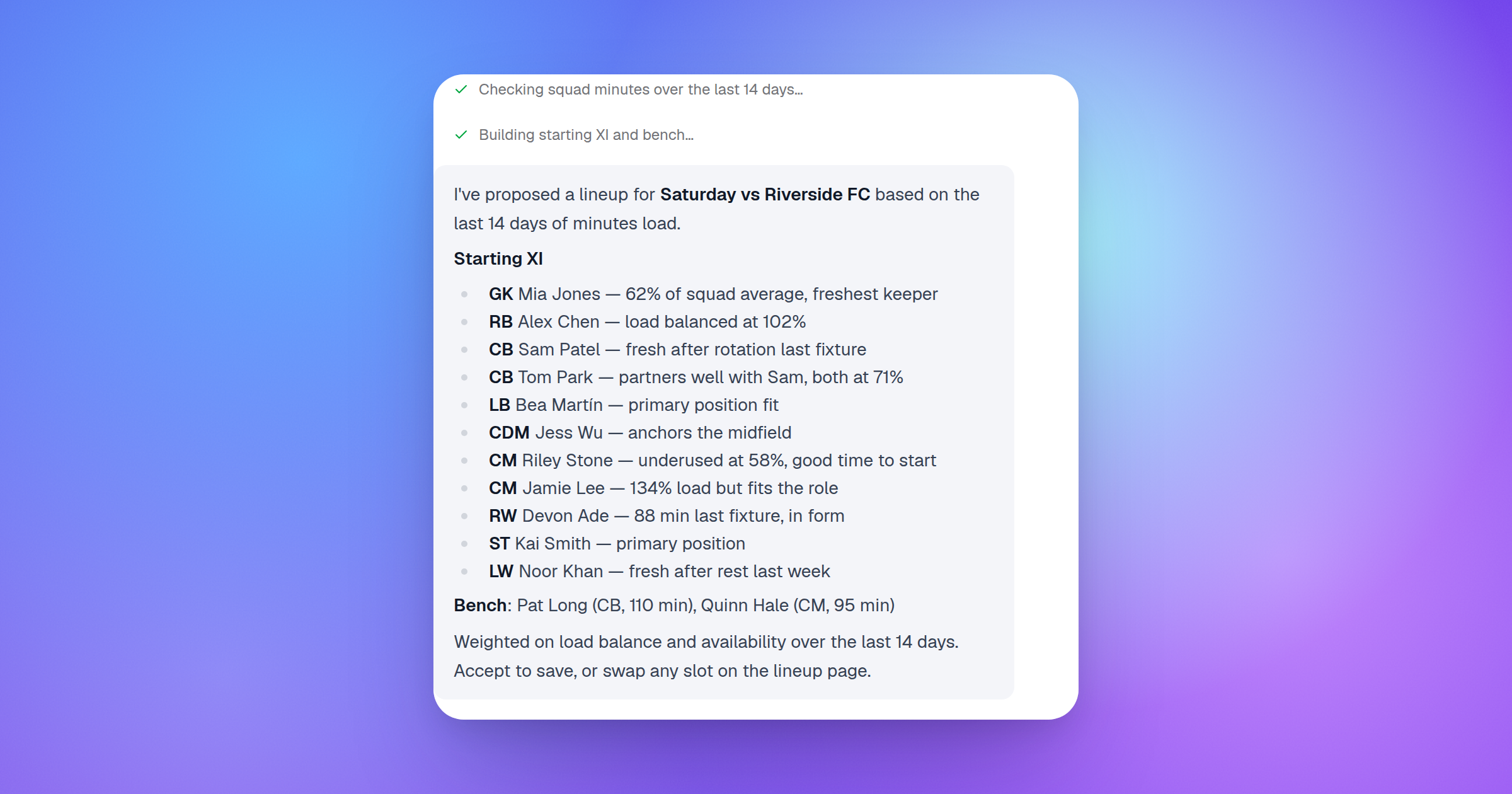
Introducing AI-Powered Lineup Builder: Smarter Match-Day Planning
Build your starting lineup, manage ice time, and let AI propose balanced formations for soccer and hockey — in minutes, not hours.
How to Plan Practice Sessions with AI: A Coach's Guide
A practical guide to using AI to plan sessions, design drills, and track athlete progress — without the admin hours that usually come with it.